

I had a Labrador Retriever named Birch, who was deeply bonded to me. He was gentle, obedient, never aggressive, and loved by everyone—one of those dogs people immediately trusted and wanted around. He was with me constantly: at home, at work, part of nearly everything I did. And yet, when it came time to sleep, he made a consistent and curious choice. He would not stay in bed with me. Instead, he would quietly move to another room or, if there were two beds, choose the other one.
At first glance, this seems contradictory. How can a dog be so attached during the day, yet choose distance at night? The answer lies in a critical distinction in canine behavior: attachment does not equal dependence.
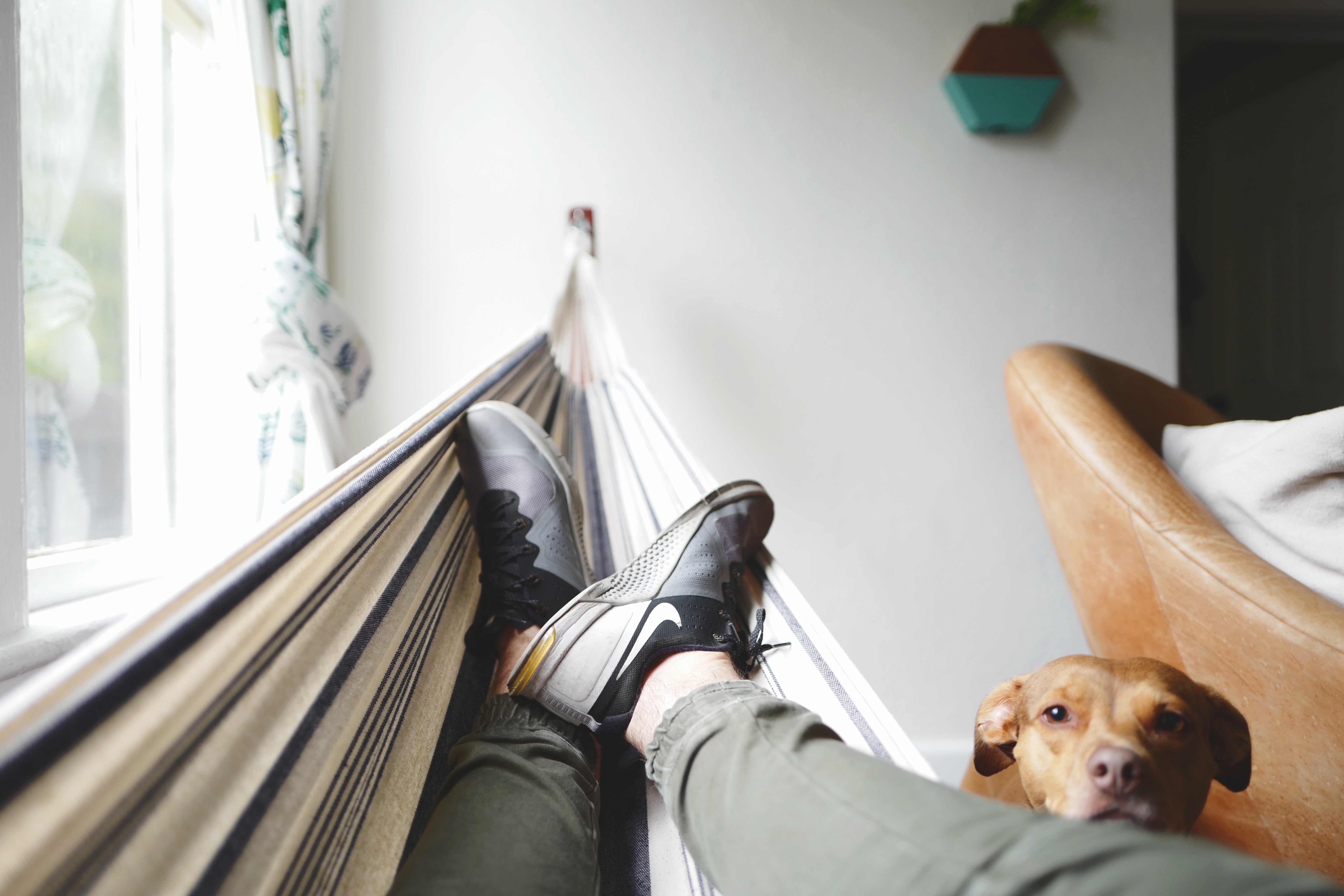
But what makes this even more interesting is that I’ve had the opposite experience as well—with my Chihuahua Yogi . This dog behaves in a completely different way. He not only sleeps with me but directly onto of my chest under the blankets. He follows me everywhere—bathroom, outside, getting ready for work—there’s no gap in proximity. The moment I sit down, even on the toilet, his head is already peeking around the corner, checking in, staying close, staying connected.
Two dogs. Both bonded. Completely different expressions of that bond. Here we will focus primarily on Birch's behavior as a study.
Understanding Canine Attachment
In behavioral science, dogs are understood to form attachment bonds with their human caregivers that closely resemble those seen between human infants and parents. This concept, often referred to as the secure base effect meaning that a dog uses its owner as a source of safety and stability.
A securely attached dog will:
- Seek proximity to its owner
- Show preference for that person over strangers
- Experience comfort in their presence
- Return to them when uncertain or stressed
My Lab demonstrated all of these traits. He followed me, stayed near me, and integrated myself into his daily life. That is textbook attachment.
But here is the important nuance: secure attachment allows for independence.

Independence Is Not Detachment
A common misunderstanding is that a “loving” dog must always want physical closeness—sleeping in the bed, leaning constantly, or following without pause. In reality, these behaviors can sometimes reflect anxiety, not just affection.
Dogs fall along a spectrum:
- Anxious attachment: clingy, unable to settle alone, distressed when separated
- Secure attachment: connected, but able to relax independently
- Avoidant patterns (less common in dogs): less engagement overall
Birch’s behavior aligns strongly with secure attachment. He was consistently present and engaged, but he did not need constant physical contact to maintain that bond.
Choosing to sleep separately is often a sign of:
- Emotional stability
- Confidence in the relationship
- Lack of separation anxiety
In other words, he didn’t need to be in the bed with me to feel connected. On the other hand Yogi the chihuahua also falls within the secure attachment spectrum, completely comfortable being alone but loving to sleep with me.(sometimes i think its just for the warmth).
Separation-Related Disorder (SRD): When Attachment Becomes Stress
An important condition to be aware of is Separation-Related Disorder (SRD), which goes beyond normal attachment and reflects a dog’s inability to cope with being alone. Separation-Related Disorder (SRD) occurs when a dog experiences true distress when left alone, not just a preference for being close. Signs can include vocalizing, destructive behavior, pacing, or an inability to settle when you’re gone. The key distinction is whether the dog can remain calm without you—attachment is healthy, but distress signals a problem. Yogi is completely fine being alone, he never exhibits anxiety or destructive behavior. His constant following me around is simply normal proximity-seeking, a genetically inbred trait of a companion breed.
The Role of Physical Comfort
Beyond psychology, there are practical factors—especially with a breed like the Labrador.
Labradors have a dense double coat, designed for insulation. While ideal for cold water and outdoor work, this coat can make indoor environments—especially beds—uncomfortably warm.
Human beds:
- Retain heat
- Limit airflow
- Restrict movement
For a large, coated dog, this can be the equivalent of sleeping under heavy blankets in a warm room.
Many dogs in this category prefer:
- Cooler surfaces (wood floors, tile)
- Open space to stretch out
- The ability to change positions freely
Birch's choice to sleep in another room or on a separate bed likely reflects physical comfort, not emotional distance. While I am pretty sure Yogi's choice to sleep with me is a comfort seeking (heat) behavior.
Sleep Style and Personal Space
Dogs, like humans, have individual sleep preferences.
Some are:
- Contact sleepers — they seek touch and closeness
- Independent sleepers — they prefer space and freedom of movement
Larger dogs, in particular, often favor:
- Full-body stretching
- Rotating positions throughout the night
- Sleeping without restriction
Even within the same breed, variation is significant. One Labrador may insist on sleeping pressed against you, while another—like yours—chooses a nearby but separate space.
The key point: sleeping style is a personal trait, not a measure of affection.

Building a Confident Dog: How Early Crate Training Shaped Birch’s Independence
I truly believe that the secret behind my dog Birch’s strong sense of confidence and independence lies in our early, consistent approach to crate training. By treating the crate as a place of comfort it helped him build a foundation for self-reliance.
If you’re looking to foster that same independence in your puppy, here is the anecdotal blueprint of the process I used with Birch:
1. The Power of Choice and Positive Association
From the very beginning, I created an environment where the crate was seen to Birch as a place of refuge / safety, a place where he wanted to be. I started by leaving the door open and allowing him to walk in and out at his own leisure. Every time he chose to enter the crate, he was rewarded. By making it a choice rather than a forced confinement, the crate became a high-value "sanctuary" rather than a cage.
2. Strategic Spatial Management
I found the create to be a invaluable tool to aid in potty training, I leveraged the natural canine instinct to avoid defecating in the area where they sleep. By using a crate with a divider, I initially gave Birch only enough room to lie down comfortably, which encouraged him to control his bowels.
This spatial management was paired with two key strategies:
- Consistency: We took frequent, scheduled trips outside to ensure he had every opportunity to succeed
- Command Imprinting: I used the verbal cue "make" to help him associate the command with the act of relieving himself.
This method was so effective that Birch’s definition of his "living space" eventually expanded beyond the crate to our entire property; he eventually refused to go to the bathroom in our backyard at all, preferring to wait until he was off the premises. He even carried this habit onto the hiking trails, where he would instinctively head deep into the woods, far off the path, to do his business.
3. Teaching the Art of Self-Soothing
Perhaps the most challenging—but most rewarding—part of our journey was managing barking. I was fortunate enough to be in a position where I could let Birch "find his own calm."
As a puppy, whenever Birch barked in his crate, I made a point to never acknowledge it. I didn’t shush him, look at him, or let him out while he was making noise. By remaining consistent, Birch learned that barking wouldn't gain him attention. Many times, he would bark himself right to sleep. While the barking can be tough to listen to in the moment, by me not reacting helped teach him how to self-regulate and settle himself without needing me to intervene.
The Result: A Confidently Independent Dog
By combining these methods early and consistently, Birch grew up understanding that being alone isn't an emergency. He learned that his crate is a safe space, that boundaries are predictable, and that he has the internal tools to stay calm on his own.
Subtle Instincts: Awareness and Positioning
There is also a quieter, often overlooked factor: environmental awareness.
Dogs, especially well-balanced working breeds, sometimes prefer sleeping positions that allow them to:
- Hear changes in the environment
- Move freely if needed
- Maintain a level of situational awareness
Sleeping deeply in a human bed can reduce that awareness. While not a dominant factor, it can contribute to a dog’s decision to choose a slightly more open or strategic resting place. I always thought the reason Birch chose to sleep away from me was to be vigilant of his surroundings, almost protecting me.
What My Experience Represents
The combination of these behaviors:
- Constant companionship during the day
- Calm, non-aggressive temperament
- Strong social acceptance by others
- High responsiveness and obedience
- Independent sleep behavior
This is not contradictory. It is, in many ways, ideal.
Birch demonstrated:
- Strong attachment without anxiety
- Independence without detachment
- Confidence without neediness
In behavioral terms, this reflects a dog that is:
- Securely bonded
- Environmentally comfortable
- Emotionally regulated
Rethinking What “Closeness” Means
There is a tendency to measure a dog’s love by physical proximity—especially at night. But this can be misleading.
A dog that:
- Must always touch you
- Cannot settle alone
- Becomes distressed when separated
May not be “more loving”—it may be less secure.
Conversely, a dog that:
- Chooses to be with you throughout the day
- Engages consistently
- Then calmly sleeps on its own
Is demonstrating trust. It assumes:
- You will still be there
- The bond is stable
- There is no need to maintain constant contact
That is a deeper form of attachment.
Comparing the Two: Two Paths to the Same Bond
By looking at Birch and Yogi side-by-side, we see the full spectrum of a healthy relationship. Birch’s independence allowed him to guard the "perimeter" of the room from a cool floor, while Yogi’s devotion (and constantly looking to be warm) leads him to be my shadow, ensuring he is never more than an inch away from the person he trusts most.
One dog chooses the quiet of a separate bed, and the other chooses the warmth of my body. Neither is "more" attached than the other—they are simply two different souls expressing the same deep sense of security in the ways that make them feel most at home.
Conclusion
Whether it’s Birch choosing a strategic, cool spot across the room or Yogi insisting on being tucked under the covers directly against my chest, the underlying truth remains the same: A secure dog feels free to choose the resting style that suits them best. Whether they seek space or shadows, their ability to settle calmly is the ultimate proof of the trust we’ve built.
Birch's and Yogi's sleeping around the house behavior is not unusual, nor is it contradictory. It represents a clear distinction between attachment and dependence.
In many ways, this balance—constant companionship paired with independent rest—is a hallmark of a well-adjusted dog. It reflects not just affection, but confidence, trust, and emotional stability.
And in the context of canine behavior, that is often the strongest bond of all.
Resources:
Sami The Vet - How Your Attachment Style Influences Your Dog's Behavior, Attachment Style, and Ability to Handle Stress
András Kosztolányi, Wohlfarth Rainer, Bettina Mutschler - Influence of Owners’ Attachment Style and Personality on Their Dogs’ (Canis familiaris) Separation-Related Disorder
Bart de Gols - The Crate As A Conditional Sanctuary: An Ethological and Neurophysicological Framework for the Evaluating Caninne Confinement
Lisa Horn, Ludwig Huber & Friederike Range - The importance of the secure base effect for domestic dogs - evidence from a manipulative problem-solving task
Karen Overall MD, DVM, PhD - Canine housetraining Part1: Humane and age-approporiat strategies
